
Protecting Your Assets: Custom Commercial Covers for Mining, Agriculture and Construction
A custom commercial cover is a canvas or PVC item cut to the exact machine, load, tank or opening it has to protect, rather than a stock tarp sized to fit roughly. On a mine site, in a paddock or on a civil job, that one difference decides whether the cover seals and stays put, or whether it flogs itself to pieces in the first windy week. Below is how to work out what your gear actually needs before you order anything.
The short version
- Fit comes first. A cover that is close enough leaves a gap, and the gap is where dust, water and wind get in.
- The fabric decides the outcome. Breathable canvas, UV stabilised poly and heavy PVC each do a different job, and site work often calls for a certified material on top of that.
- A worn cover is usually a repair, not a replacement. Ask before you write it off.
What a cover has to survive on an Australian work site
Three things wear covers out on site: UV loading that runs all year, abrasive dust and bulk material, and wind lifting a loose edge until the whole thing lets go. Heat, washdown chemicals and process water finish the job. None of that is unusual for Queensland. It is simply the reason a cover has to be specified against the conditions instead of bought off a shelf.
Mining and resources
Mine site conditions rule out most general purpose material. Abrasion from bulk handling, chemical exposure from process water and reagents, static build up in dust laden air and hot work nearby all point to a certified fabric rather than a generic one. That is why we specify containment liners and technical fabrics for mining and heavy industry as a material class first and a cover second. Conveyor and transfer point curtains, brattice and ventilation screening, dust containment at chutes and bins, machinery covers for plant sitting through a standdown: each has a different fabric answer.
Two jobs sit alongside the covers themselves. Tank and dam liners, bunding and spill capture fall under custom liners and containment, where a poor fit is a containment failure rather than a cosmetic problem. Flatbed and semi trailer tarps, rail freight covers for open wagons, and container covers sit with truck, transport and trailer covers, which is also where curtain sider repairs and re roping live.
Agriculture
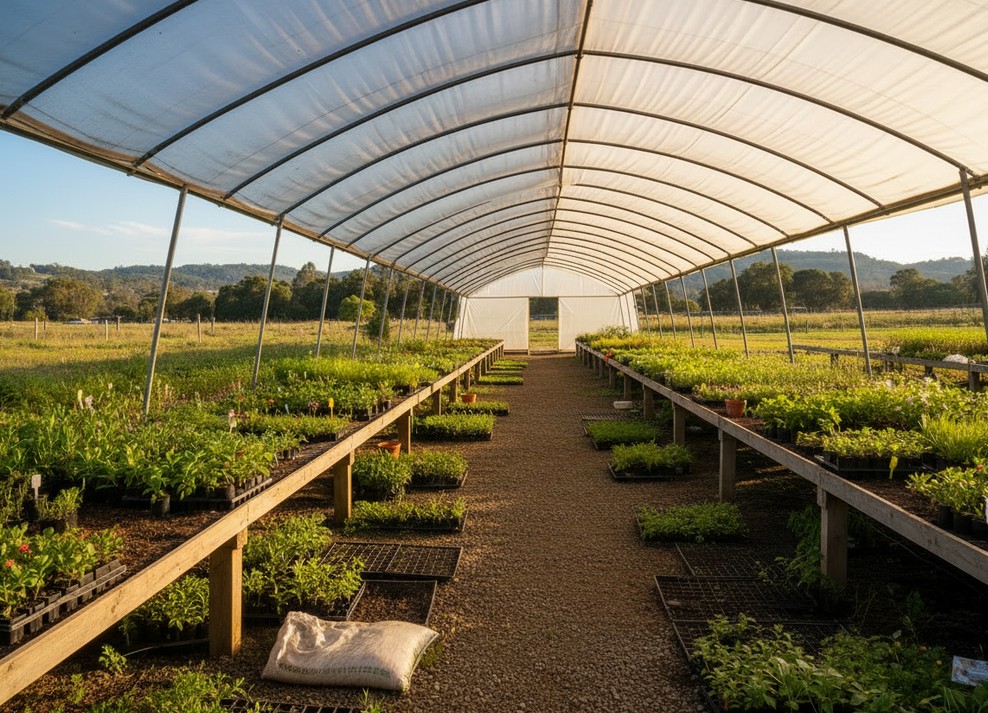
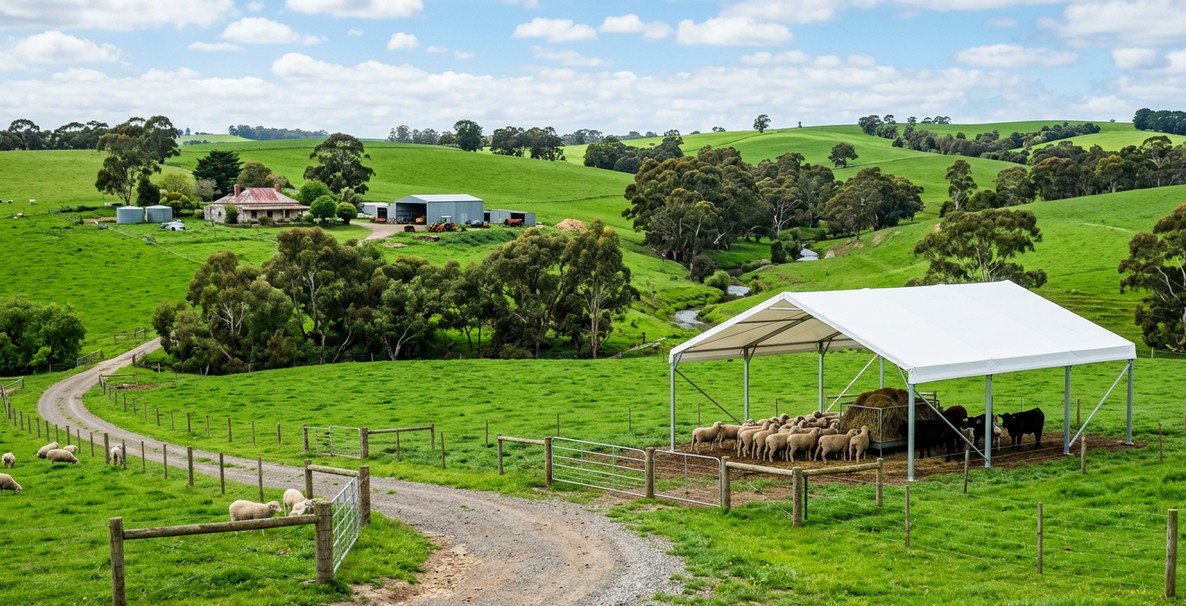
Queensland farming runs on extremes. Intense heat one week, torrential rain the next, and gear that has to sit out in both. Hay and feed covers, stockpile covers, machinery covers for the quiet months and dam or pond liners are the usual list. Material choice decides more than waterproofing here, because condensation trapped under a waterproof cover does its own damage. Breathable canvas lets moisture vapour escape while still shedding water, which is why it is a common pick for custom tarps in canvas, poly fabric and PVC where airflow matters.
Construction and civil
Debris, dust, rain and UV all work on the same gear at once, and a cover has to survive being pulled on and off by people in a hurry. Scaffold sheeting, concrete curing covers, debris containment, roofing tarps, skip bin covers, pallet and stock covers in the yard: these are everyday items on the commercial and industrial covers side of the workshop.
Does the fabric really matter that much?
Yes. A cover only performs as well as the fabric it is made from. Three materials cover most general work. Canvas is breathable and repairs easily, which suits stockpile and agricultural use. Poly fabric is lightweight, waterproof and UV stabilised, which suits general covering, transport and storage. PVC is the heavy option for demanding jobs such as truck tarps and industrial fabrication. The fabric guide walks through the trade offs if you are weighing them up.
Site work adds a second layer of choice on top of that. Geomembranes and geotextiles for containment. FRAS, meaning fire retardant and anti static, for underground and confined applications. Standalone fire retardant for welding and hot work screens. Standalone anti static for dust laden bulk handling. Acoustic constructions for plant and crusher noise. Potable contact material certified to AS/NZS 4020 for camp and site water storage. Silicone coated low friction fabric for chutes and hoppers. Chemically resistant material selected against the actual reagent and concentration, not a general claim.
Worth being clear about the limits of that. We are a manufacturer, not a fabric mill and not a certifier. Where your project specification nominates a material, we work to it. Where it does not, we recommend against the exposure conditions and supply the manufacturer’s technical data sheet and test certification with the finished item.
Why made to measure outlasts a stock tarp
A near fit does not just look untidy. It lets dust through, it wears out faster where it rubs, and it gets pulled off and left off within a month. A cover cut to the measured item sits tight, so there is less flap, less abrasion at the contact points and fewer places for water to sit. Tie down positions go where the operator can actually reach them.
The same thinking applies indoors. Machine and equipment covers get made around the control panels and access points that are already there, and industrial curtains get measured to the real opening, working around racking and beams. That is the bulk of the manufacturing and warehousing work: curtains, fumigation tarps, machine covers and containment textiles built to the space rather than to a catalogue size.
Before you replace it, get it looked at
Split seams, a jammed or torn out zip, a rip from a tie down, worn eyelets, a cover that has stretched out of shape: these are everyday jobs, not write offs. Because we build covers from scratch, we can fix gear we made and gear made by someone else. Repairs run to re stitching, patching, re zipping, resizing and re proofing in the same heavy canvas and PVC the covers are made from, so the repair matches the original instead of letting go a month later. Canvas and PVC repairs happen at our Redland Bay workshop, and a mobile service is available.
Common questions
Can you work to our site specification?
Yes. Where your specification or your auditor nominates a material, we work to it. Where nothing is nominated, we recommend against the exposure conditions on your site and supply the data behind the recommendation.
Do you supply certification with the material?
Yes. If the specification calls for a material we do not hold, we source it and supply the manufacturer’s technical data sheet and test certification with the finished item.
Can you cover an irregular shape or a non standard size?
That is the usual job rather than the exception. An irregular shape, a non standard size or a compliance requirement is exactly the kind of work we take on, because every item is measured and fabricated to what is in front of us.
Do you only supply South East Queensland?
No. We manufacture at Redland Bay in Brisbane and supply across Queensland and interstate. A mobile service is available as well.
Talk to us about your site
We have 25 years behind us fabricating custom covers, tarps and liners, all of it out of the Redland Bay workshop. If you have plant, loads or storage sitting in the weather and you are not certain what the right material is, tell us the conditions and the application and you will get a straight answer. Call Jason or Leah on 0411 781 221, email hello@ljcovers.com.au, or start a quote.
What Others Are Reading:

Our Services
Contact Us
Contact our team today for a free quote on your custom cover or textile solution.